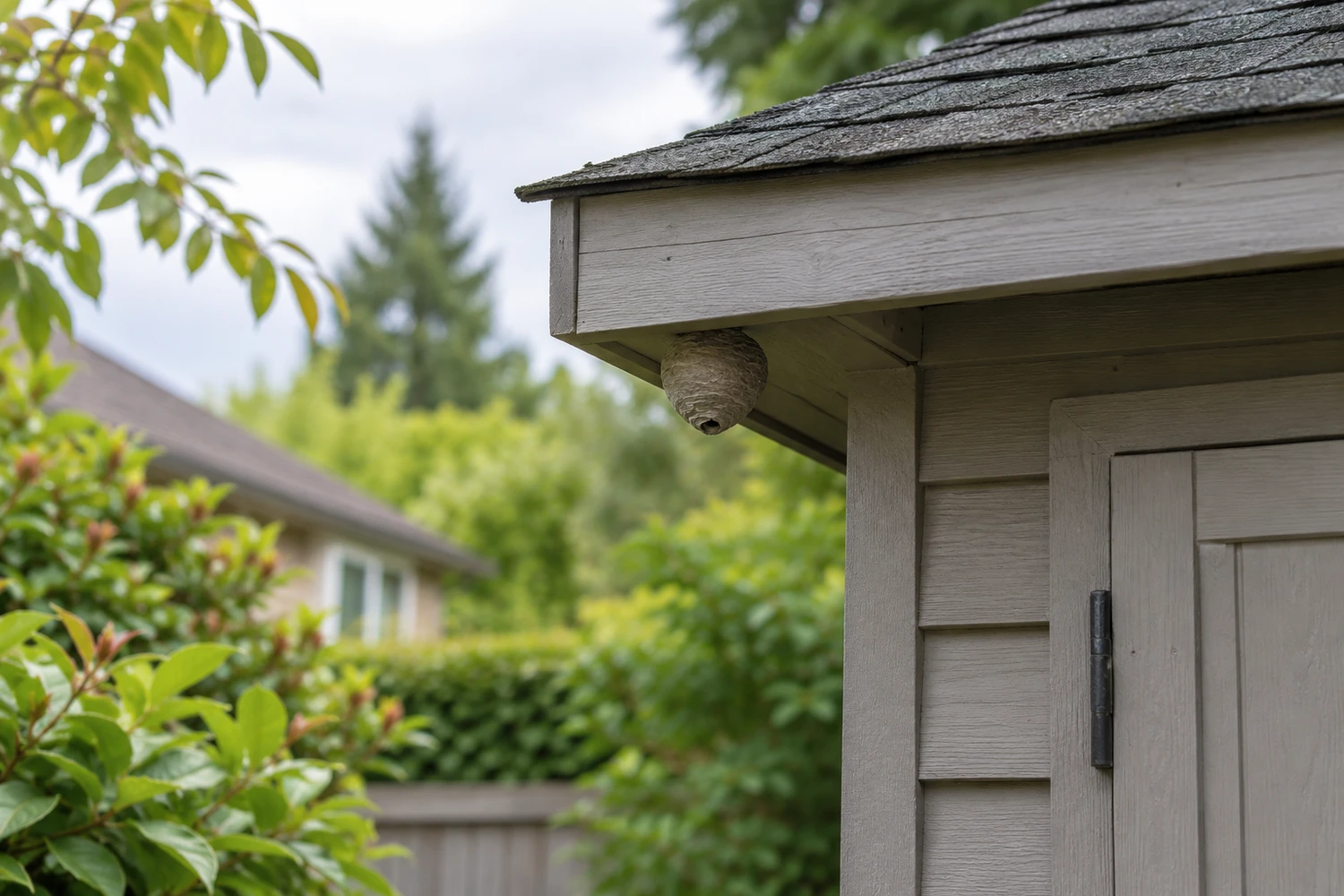
Three kinds of wasp account for most nests here. Yellowjackets nest in the ground and in wall voids and are the most likely to sting. Bald-faced hornets build the large grey paper nests you see hanging in trees and under eaves. Paper wasps build small open combs and are the least aggressive.
Every colony starts from a single queen in spring and grows through the summer. Nests peak in August and September, which is when most stings happen. The colony dies off with the first hard frosts, only new queens survive the winter, and an old nest is not reused.
That timing gives you options. A small nest high in a tree at the back of the yard can often be left to die off on its own. A nest by the front door, in the ground where children play or inside a wall should be dealt with.
Never seal the entrance to a nest in a wall. With their exit blocked, wasps chew through drywall and come out inside the house. A provider treats the nest through the entry point, typically in the evening when the wasps are home and calm, and comes back to remove or seal up once activity has stopped.