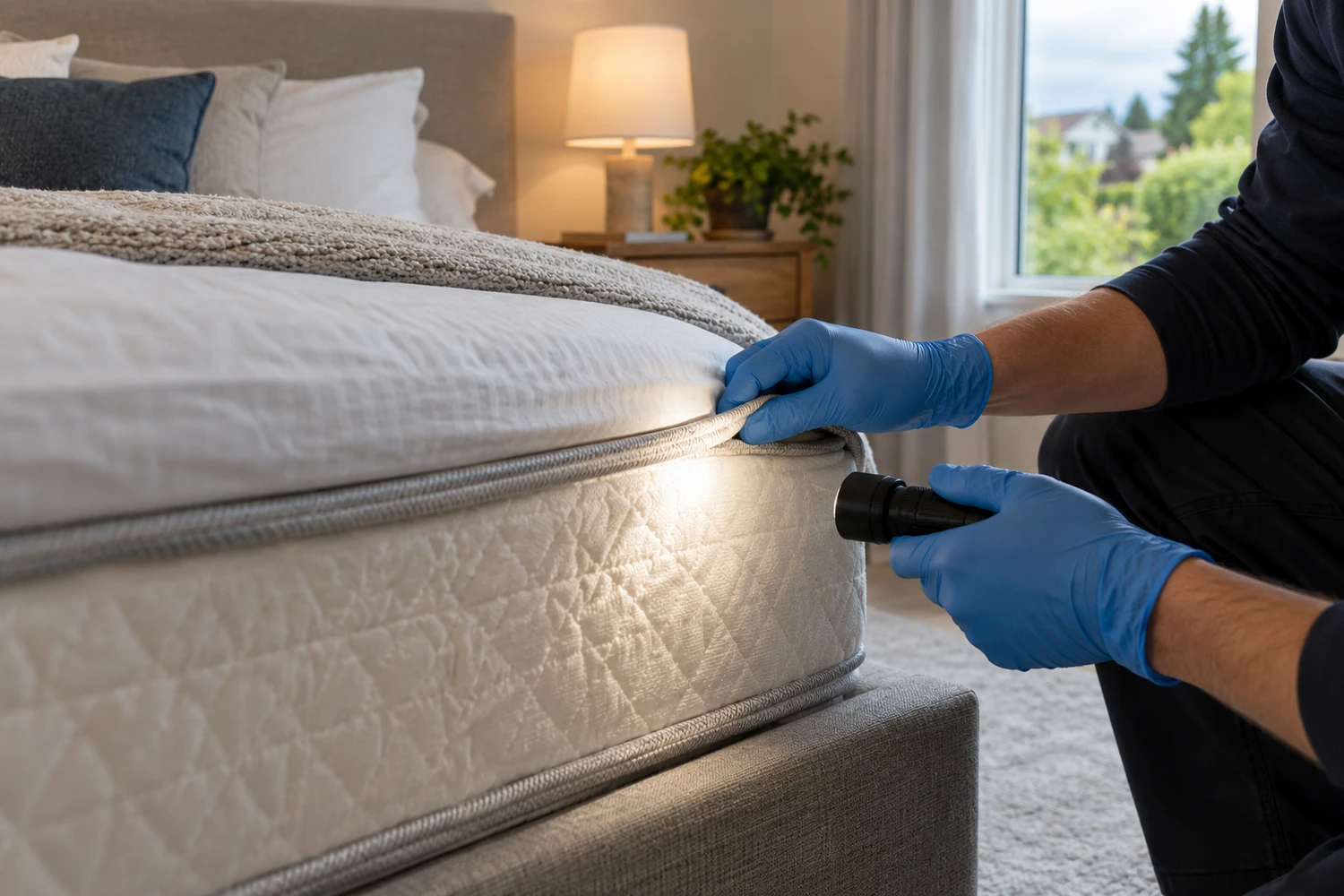
The first job is confirmation. Bites alone prove nothing, because reactions vary and other insects bite too. A provider looks for live bugs, shed skins and spotting in the seams of the mattress, the bed frame, the headboard and nearby furniture.
There are two main treatment routes. Heat treatment raises the temperature of a room high enough, for long enough, to kill bugs and eggs, with the treatment itself done in a day. Chemical treatment uses residual products applied to cracks, seams and furniture over two or more visits, usually about two weeks apart, to catch bugs that hatch after the first application. Many providers combine methods and add steam for mattresses and soft furniture. Vancouver Coastal Health says to be prepared for more than one treatment.
Preparation is half the result. You will usually be asked to launder and bag bedding and clothing on high heat, reduce clutter and leave furniture where it is. Moving items to other rooms spreads the problem.
In a condo, townhouse or rental, tell your strata or landlord early. Bed bugs move through wall voids and along pipes, so neighbouring units often need inspecting. In BC rentals, pest control is generally the landlord's responsibility, and tenants are expected to report it promptly and cooperate with preparation.